
Peter Max, Psychedelic Pop-Art Visionary and Friend of The Beatles, Dies at 88
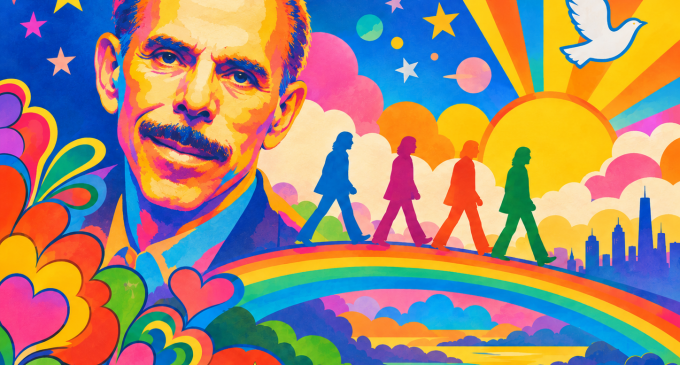
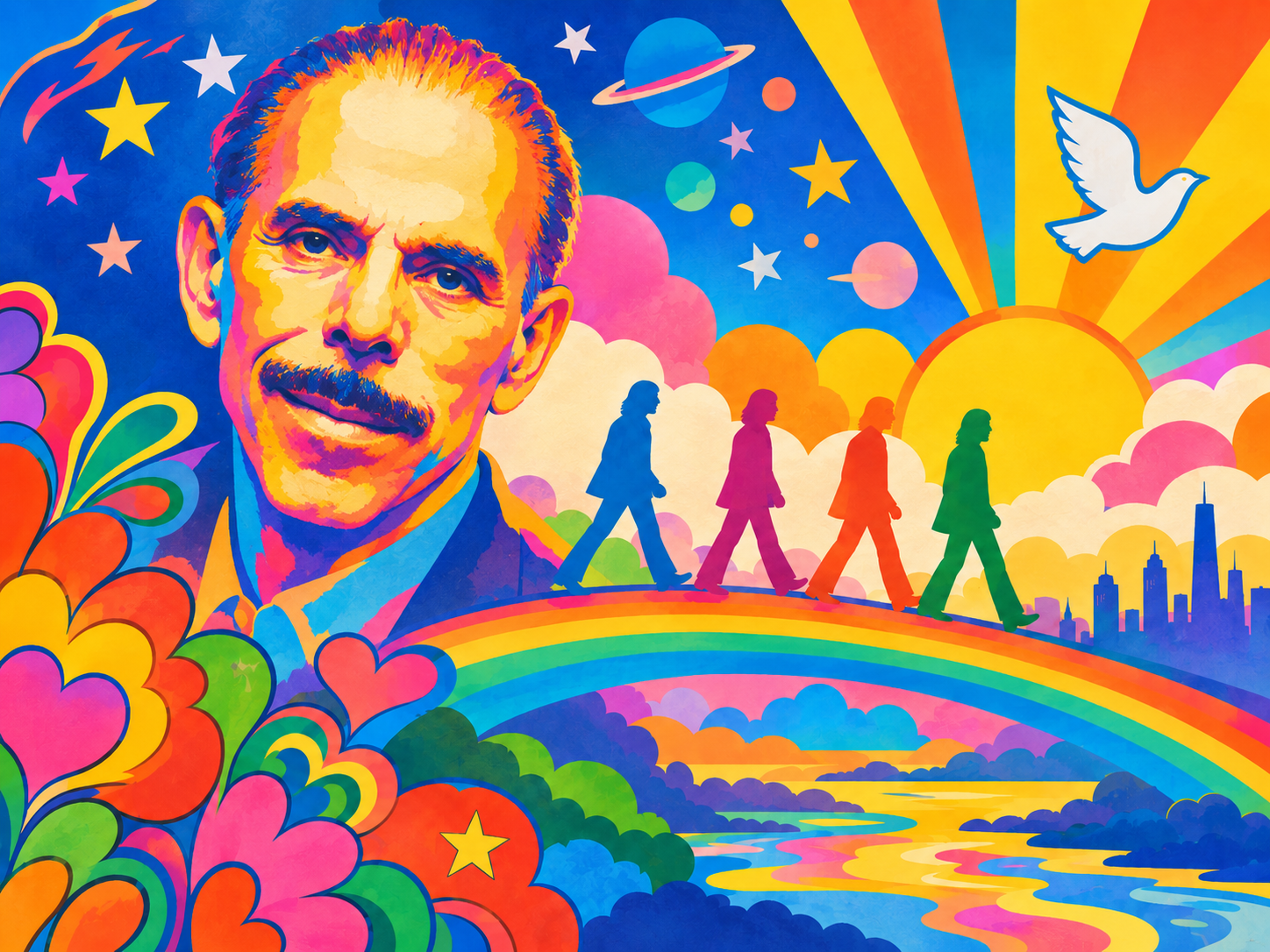
Peter Max, Psychedelic Pop-Art Visionary and Friend of The Beatles, Dies at 88
Peter Max, the artist whose exploding rainbows, cosmic landscapes, stars, flowers and Day-Glo colors helped create the visual vocabulary of the 1960s, died September 14, 2026, at a hospital in Manhattan. He was 88. His son, Adam Max, confirmed his death. Max had suffered from dementia for many years. (AP News)
For Beatles fans, Max occupied a particularly fascinating place in the culture of the era. He did not make the music, but his art seemed to inhabit the same universe.
At the height of Beatlemania’s transformation into psychedelia, when Revolver gave way to Sgt. Pepper’s Lonely Hearts Club Band, Eastern spirituality entered popular culture and the monochrome early Sixties suddenly burst into Technicolor, Peter Max was creating a parallel visual language in America. His floating figures, celestial bodies, brilliant colors and optimism seemed almost like pictures of what the music sounded like.
Max’s own studio biography notes that critics described his work as “the visual arts counterpart to the music of the Beatles.” (Peter Max Studio)
His relationship with The Beatles was more than stylistic.
Max said he became friendly with the group, particularly John Lennon, and over the years he painted Beatles-related subjects and portraits. The connection has also produced one of the most persistent misconceptions in popular culture: that Peter Max designed The Beatles’ 1968 animated film Yellow Submarine.
He did not.
The film was directed by George Dunning, with Heinz Edelmann as art director, a credit confirmed by The Beatles’ own official history of the production. (The Beatles)
There was, however, a genuine Max connection.
Max recalled that Lennon contacted him about working on Yellow Submarine. Max maintained that he supplied early ideas or styling but could not commit to the lengthy European production. Park West Gallery, which represented Max for many years, describes his participation more cautiously as early consulting work. Max also said he recommended Edelmann for the project. (San Diego Reader)
That distinction is worth preserving. Peter Max did not create the finished Yellow Submarine world, but the fact that generations of viewers assumed he had is itself a measure of his cultural impact. His Cosmic ’60s imagery and the Beatles film emerged from much the same psychedelic moment, and their visual vocabularies became permanently intertwined in the public imagination.
Max’s Beatles connection continued long after the group separated.
One of his best-known portraits of Paul McCartney was created for the May 31, 1976 cover of Time, depicting McCartney performing amid Max’s characteristic eruptions of brilliant color. The original work is now held by the Smithsonian’s National Portrait Gallery. (Smithsonian Institution)
Decades later, Max returned to McCartney as a subject.
On June 18, 2012, Paul’s 70th birthday, Max unveiled a series of seven Paul McCartney portraits at his New York studio. The work arranged multiple images of McCartney alongside a brightly painted heart containing a personal birthday message from Max.
The gesture seemed especially appropriate. Max and McCartney were both survivors of the extraordinary creative explosion of the 1960s who continued working for decades after the era that first made them famous.
Born Peter Max Finkelstein in Berlin in 1937, Max came from a Jewish family that fled Nazi Germany. His childhood took him through Shanghai and Israel before his family eventually settled in New York. There he studied art and began working professionally in graphic design in the early 1960s. (People.com)
By the end of the decade he was everywhere.
His posters covered dormitory walls. His imagery appeared on clothing, household products, magazine covers and advertising. He appeared on The Ed Sullivan Show, the same television stage that had helped turn The Beatles into an American phenomenon. His work eventually extended to postage stamps, airplanes, automobiles and even the hull of a cruise ship. He became official artist for major events including the Olympics, the Super Bowl, the World Cup and the World Series. (The Washington Post)
Max was also deeply attracted to Eastern spirituality and yoga, another area in which his life intersected with the cultural world inhabited by The Beatles. He helped bring Swami Satchidananda to the United States in the 1960s and later recommended him to open the Woodstock festival in 1969. (Sri Swami Satchidananda)
What separated Max from many of his Pop Art contemporaries was an almost stubborn optimism. Where some Pop Art was ironic, detached or deliberately confrontational, Peter Max offered stars, planets, flowers, peace signs, lovers, profiles and endless suns.
He wanted the world to look brighter.
That philosophy made him enormously commercial, occasionally controversial among art critics, and instantly recognizable to millions of people who might never have walked into a gallery.
And that may ultimately be the strongest link between Peter Max and The Beatles.
Both helped make the experimental accessible. Both absorbed influences from pop culture, Eastern thought, surrealism and the rapidly changing world around them. Both emerged from the 1960s believing that serious art did not necessarily have to look serious.
Peter Max painted the optimism, strangeness and color of an era in which The Beatles provided much of the soundtrack.
He leaves behind his children, Adam and Libra, and an extraordinary visual archive of a period when music, fashion, art and youth culture collided and, for a few remarkable years, seemed capable of changing everything. (People.com)
Peter Max, 1937–2026.
For Beatles fans, he will remain forever associated with that remarkable moment when the world went from black and white to psychedelic color, and when, somewhere between Pepperland and Peter Max’s cosmic universe, all you needed really did seem to be love.


There are no comments at the moment, do you want to add one?
Write a comment